

As large enterprises continue to expand and digitise their operations, the demand for faster and more reliable internet connectivity has reached unprecedented levels. Businesses today rely heavily on cloud-based services, real-time data analytics, and global communication platforms to stay competitive in a digital-first world. Traditional internet infrastructure often struggles to keep up with these increasing demands, leading to bottlenecks that can hinder productivity and growth.
Enter fibre optic internet—a breakthrough technology that transforms the way enterprises connect and operate. Boasting unmatched speed, reliability, and scalability, fibre optic internet is specifically designed to support the high-performance needs of modern businesses. For organisations aiming to stay ahead in a rapidly evolving digital landscape, fibre optic internet represents a critical investment in their future.
Understanding Fibre Optic Technology
Fibre optic internet works by transmitting data as pulses of light through incredibly thin strands of glass or plastic, known as fibre optic cables. Unlike traditional copper wires that rely on electrical signals, these cables use light to send information over long distances at extremely high speeds. To put it simply, the light signals act like messages being sent in a secret code, travelling down the cable much faster than any signal carried by copper.
One of the key advantages of fibre optic internet is its superior bandwidth. This means it can handle much more data at once compared to copper-based connections, making it perfect for modern needs like video conferencing, large file sharing, and streaming high-definition content without lag.
Additionally, fibre optic cables lose far less signal strength over long distances, ensuring a consistent and reliable connection. Imagine watching a movie in crystal-clear detail while someone else in your household is uploading large files—fibre optics can manage it all seamlessly. This combination of speed and efficiency is what makes fibre optic internet a game-changer for both businesses and households alike.
Benefits of Fibre Optic Internet for Large Enterprises
Speed
One of the most significant advantages of fibre optic internet is its unparalleled speed. With lightning-fast data transmission, large enterprises can handle bandwidth-intensive operations such as video conferencing, cloud computing, and transferring massive datasets with ease. This ensures that teams can collaborate effectively in real-time, regardless of their physical location, and perform everyday operations without delays or disruptions. Fibre optic speed supports the level of efficiency and productivity that modern enterprises demand in today’s competitive environment.
Reliability
Fibre optic internet is exceptionally reliable, offering resilience against many factors that can disrupt traditional broadband connections. Unlike copper-based systems, fibre is resistant to interference from weather conditions and electromagnetic signals, making it far less prone to outages. Additionally, fibre optic cables have low latency and are less likely to degrade over time, ensuring consistent performance. For large enterprises, this reliability is critical, as even a short period of downtime can cause significant disruptions to operations and revenue.
Scalability
Fibre optic internet is designed to accommodate the growing demands of large organisations. As enterprises scale up their operations and require increased bandwidth to support new technologies and larger teams, fibre optic connections can easily handle the load. Whether it’s adopting advanced business tools, expanding cloud storage capacities, or handling an influx of users, fibre optic internet provides the flexibility and scalability to meet these demands without compromising on performance. This makes it an indispensable solution for organisations looking to future-proof their IT infrastructure.
Comparing Fibre Optic to Traditional Internet
When evaluating fibre optic internet against traditional copper-based internet connections, the differences become clear across several key categories. Below is a summary of how these technologies compare:
| Category | Fibre Optic Internet | Traditional Copper-Based Internet |
|---|---|---|
| Speed | Offers significantly faster speeds, often up to 1 Gbps or more, supporting high-demand tasks like 4K streaming and large file uploads. | Speeds are generally much lower, often capping at around 100 Mbps, which may struggle with modern usage demands. |
| Reliability | Highly reliable with minimal interference, even over long distances, and consistent performance under heavy usage. | Prone to signal degradation, interference, and reduced performance over longer distances or during peak times. |
| Bandwidth | Substantially greater bandwidth, allowing multiple devices or users to perform high-data tasks simultaneously without slowing down. | Limited bandwidth, causing noticeable slowdowns when many devices or applications are in use. |
| Long-Term Cost-effectiveness | Requires a higher initial investment but boasts lower maintenance costs and significantly longer durability, offering better value over time. | Typically cheaper upfront but incurs higher maintenance costs and frequent upgrades due to ageing infrastructure, leading to higher expenses in the long run. |
Key Takeaway
Fibre optic internet outperforms copper-based connections in almost every category, making it ideal for businesses and individuals who need fast, reliable, and future-proof connectivity. While traditional connections may suffice for basic tasks, the growing demands of modern internet usage underscore the advantages of upgrading to fibre optic technology.
Key Factors for Large Enterprises to Assess Before Transitioning to Fibre Optic Internet
When large enterprises consider transitioning to fibre optic internet, several critical factors must be thoroughly evaluated to ensure a smooth and successful implementation.
Cost
The cost of transitioning is a primary concern for any organisation. Businesses must weigh the upfront investment against long-term savings and the return on investment (ROI). Fibre optic internet often requires significant initial expenditure for installation and equipment, but its reliability, higher speeds, and scalability can lead to considerable cost efficiencies over time. These benefits, such as reduced downtime and enhanced productivity, often offset the initial expense, making fibre optic a financially viable solution in the long run.
Infrastructure
Another key consideration is the current state of existing infrastructure. Enterprises need to assess whether their current systems are compatible with fibre optic technology or if upgrades are necessary. This involves evaluating factors such as building cabling, the locality’s fibre readiness, and any potential construction work required to facilitate the transition. Early identification of these requirements can help to budget effectively and minimise disruptions during the implementation process.
Internet Service Providers (ISPs)
Choosing the right Internet Service Provider (ISP) is essential to ensure high-quality service and reliable support. Enterprises should look beyond just price, considering crucial aspects such as bandwidth guarantees, service-level agreements (SLAs), and customer support responsiveness. Additionally, researching an ISP’s reputation, uptime history, and ability to address the unique demands of large-scale operations can make a significant difference in the success of the transition.
Advancements in Fibre Optic Technology
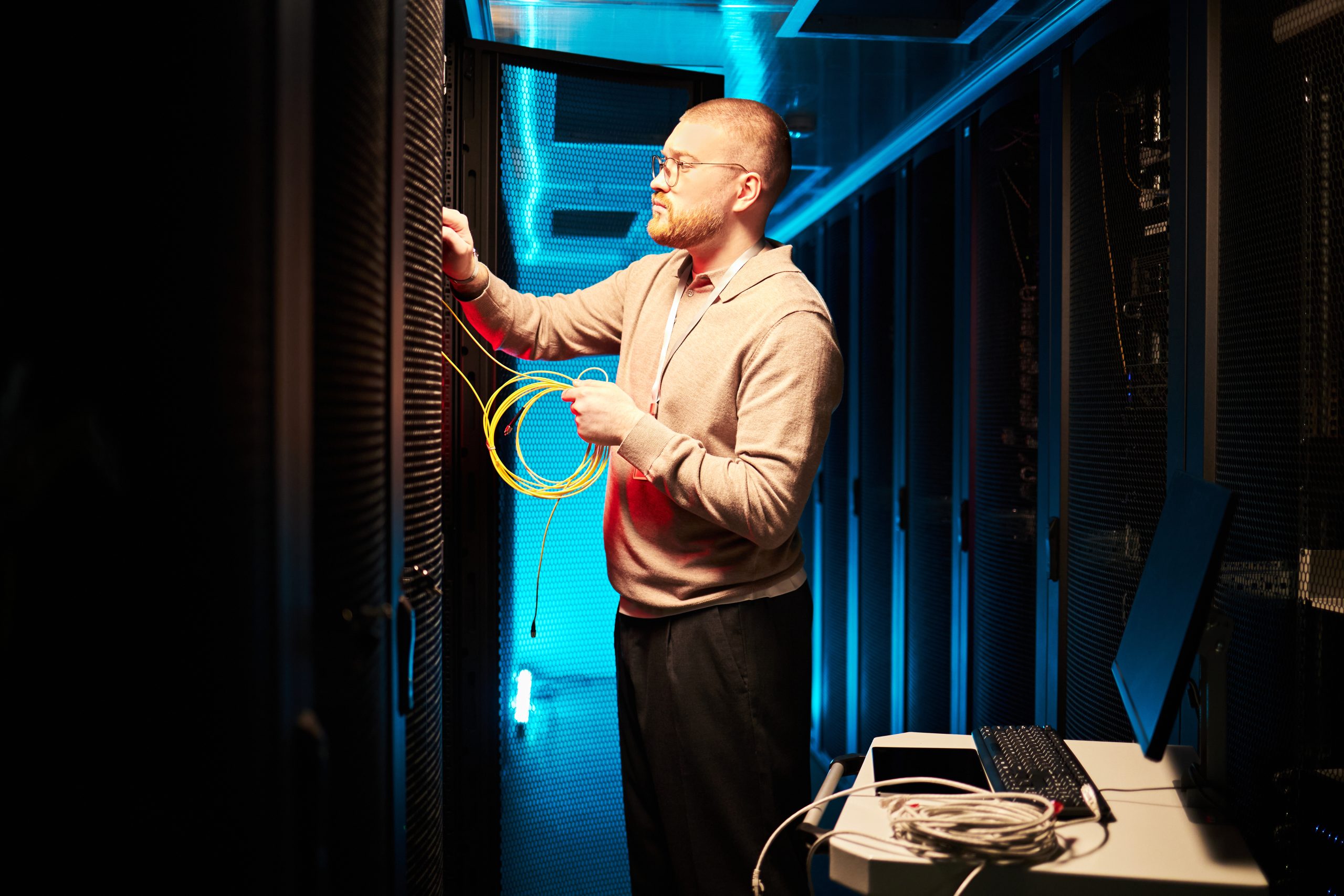
Fibre optic technology continues to evolve, driving unprecedented improvements in speed and connectivity for enterprises. The ongoing advancements promise to push the boundaries of what businesses can achieve, enabling data transmission at rates previously thought impossible. Key developments include integrating Artificial Intelligence (AI), 5G networks, and the Internet of Things (IoT) into enterprise operations, all of which rely heavily on high-speed, low-latency internet connections. AI-powered network optimisation ensures efficient data flow and enhanced decision-making, while 5G enables real-time connectivity for mobile and remote applications. Meanwhile, the proliferation of IoT devices demands robust infrastructure capable of managing immense amounts of data seamlessly.
Additionally, as fibre optic deployment becomes more cost-effective and infrastructure development accelerates globally, businesses of all sizes stand to benefit from broader access. These changes lower the barriers to adoption, making cutting-edge fibre technology accessible to a wider range of industries and geographic regions. This infrastructure shift is poised to level the playing field for smaller enterprises and drive innovation by providing a solid foundation for digital transformation. As costs continue to decrease and networks expand, the potential for new applications and opportunities in connected industries will only grow, reshaping the way businesses operate and interact on a global scale.
Experience the future of connectivity with Lightstruck!
We’re revolutionising Southern Africa’s digital landscape by bringing high-speed, reliable fibre optic internet to your community. At Lightstruck, we are committed to empowering businesses, enhancing everyday life, and transforming education through advanced communication technology. Say goodbye to outdated copper connections and enjoy the superior speed, signal strength, and efficiency that only fibre can offer. Join the thousands of residential and commercial users already benefiting from secure and seamless internet. Visit our website today to check availability in your area and make the switch to a smarter, faster connection with Lightstruck!