

The way we connect to the internet has undergone a remarkable transformation over the years to keep up with the increasing demands of modern life. With the rise of video streaming, online gaming, remote work, and smart devices, speed and reliability have become non-negotiable essentials.
At the forefront of this innovation is fibre-optic technology—a groundbreaking advancement that has revolutionised digital communication by delivering unmatched speed and consistency. Understanding how fibre internet works is crucial for anyone seeking to upgrade their connectivity, as it could hold the key to a seamless and frustration-free online experience.
What is Fibre Internet?
Fibre internet is a type of high-speed broadband connection that transmits data using pulses of light through ultra-thin fibre-optic cables made of glass or plastic. Unlike older technologies such as ADSL, which rely on copper telephone wires, or LTE, which uses wireless signals, fibre-optic cables are designed to handle significantly larger amounts of data without signal degradation over long distances.
This means that fibre internet offers unmatched speed and reliability, enabling users to enjoy seamless streaming, faster downloads, and low-latency online gaming. Compared to copper-based connections, fibre internet is also less prone to interference from electrical noise or adverse weather, making it the superior choice for a stable and high-performance online experience.
How Does Fibre Internet Work?
Fibre-optic cables are designed to transmit data using light signals, and their sophisticated structure is key to their efficiency. At their core is a thin, transparent strand of glass or plastic known as the core, which carries the light signals. Surrounding the core is the cladding, a layer made of a material with a lower refractive index. This combination ensures that light signals are contained within the core, utilising the principle of total internal reflection. When light pulses hit the boundary between the core and cladding at a specific angle, they are reflected back into the core, enabling the light to travel long distances with minimal loss.
The transmission of data through fibre optics involves encoding information onto light pulses. These pulses represent binary data (1s and 0s) and move rapidly through the cable, providing incredibly high-speed communication. The efficiency of this process is enhanced by the lack of interference and lower signal degradation, making fibre optics an ideal medium for data transmission.
At the endpoint of fibre-optic networks, the Optical Network Terminal (ONT) plays a crucial role. The ONT receives the light signals travelling through the fibre-optic cables and converts them into electrical signals that can be processed by computers, routers, and other devices. This conversion ensures that the light-based transmission system seamlessly integrates into everyday internet use, delivering fast and reliable connectivity for users.
By harnessing the science behind light transmission and maintaining a robust infrastructure, fibre-optic technology continues to be a powerful solution for modern communication needs.
Benefits of Fibre Internet
Faster Speeds
Unmatched Upload and Download Speeds
One of the standout benefits of fibre internet is its unparalleled upload and download speeds, which are significantly faster than traditional broadband connections. With fibre, activities like streaming 4K movies become seamless, as there’s no risk of annoying buffering or delays. For example, imagine downloading a full-length 4K film in a matter of minutes rather than hours or uploading large files, such as high-resolution videos or extensive work presentations, in seconds.
This level of speed also caters perfectly to gamers, remote workers, and households with multiple devices connected simultaneously, ensuring a smooth, lag-free experience no matter the demand. Fibre’s symmetric speeds—allowing upload and download rates to be equally fast—offer a distinct advantage for video conferencing, live streaming, and cloud-based tasks, making it an ideal choice for modern digital lifestyles.
Reliability and Low Latency
Fibre optic cables are immune to electrical interference, ensuring a more stable and reliable connection even in environments with significant electromagnetic activity. Unlike traditional copper lines, which can suffer from signal degradation due to interference from nearby electronic devices or power lines, fibre maintains its performance and clarity over long distances. This inherent stability eliminates disruptions and provides a seamless internet experience.
Additionally, fibre optic networks are renowned for their exceptionally low latency. This quality is particularly beneficial for real-time applications such as video conferencing, online gaming, and live streaming, where even slight delays can disrupt the user experience. Low latency ensures smooth audio-visual communication during video calls, faster response times in competitive gaming environments, and uninterrupted performance for high-demand tasks. By combining stability and low latency, fibre is perfectly suited to meet the demands of both personal and professional digital activities.
Consistency & Scalability
One of the standout advantages of fibre connectivity is its ability to deliver consistent speeds over long distances. Unlike traditional broadband technologies that may experience significant signal degradation as the distance increases, fibre maintains reliable performance, ensuring users can enjoy high-speed internet regardless of their location within a provider’s network. This makes it particularly beneficial for rural and remote areas.
Furthermore, fibre is inherently future-proof, designed to accommodate the ever-growing demands of data consumption. As households and businesses continue to rely on bandwidth-heavy applications and emerging technologies such as 8K streaming, virtual reality, and the Internet of Things (IoT), fibre has the capacity to scale with ease. Its vast bandwidth potential ensures that it will remain a sustainable and robust solution for the foreseeable future, supporting the digital needs of tomorrow.
Types of Fibre Connections
Fibre connections come in various configurations that determine the speed and efficiency of internet delivery to end-users. Here are the primary categories of fibre connections:
1. Fibre-to-the-Home (FTTH) / Fibre-to-the-Premises (FTTP)
FTTH or FTTP provides a direct fibre connection from the provider to the user’s home or premises. This is the fastest and most reliable option as it eliminates the reliance on older technologies like copper wiring.
- Pros:
- Superior speed and bandwidth for activities like 8K streaming and virtual reality.
- Consistent and reliable performance, even during peak usage.
- Future-proof as technology evolves.
- Cons:
- Higher installation costs due to the extensive fibre infrastructure required.
- Limited availability in remote or rural areas.
2. Fibre-to-the-Building (FTTB)
FTTB delivers fibre connectivity to a shared building, such as an apartment complex or office building. From there, copper wiring is used to distribute the connection to individual units.
- Pros:
- Suitable for multi-dwelling units and dense urban environments.
- Lower installation costs compared to FTTH.
- Cons:
- Performance is reduced due to the use of copper for internal connections.
- Speed can vary depending on the wiring distance and quality.
3. Part-Fibre Connections (FTTN / FTTC)
Part-fibre networks, such as Fibre-to-the-Node (FTTN) or Fibre-to-the-Curb (FTTC), use fibre cables to reach a central point, like a street cabinet, with the last stretch to homes or businesses completed via existing copper lines.
- Pros:
- More widespread availability due to the use of existing infrastructure.
- Lower deployment costs than full fibre solutions.
- Cons:
- Lower speeds and higher latency compared to FTTH or FTTB.
- Performance can degrade significantly with longer copper distances.
Standard Fibre Installation Process
The fibre installation process begins with the roll-out of fibre-optic cables, which typically involves trenching or aerial cabling. This stage ensures that the infrastructure needed to provide high-speed connectivity is laid securely and efficiently. Once the cables are deployed to the required location, the installation moves to the premises level.
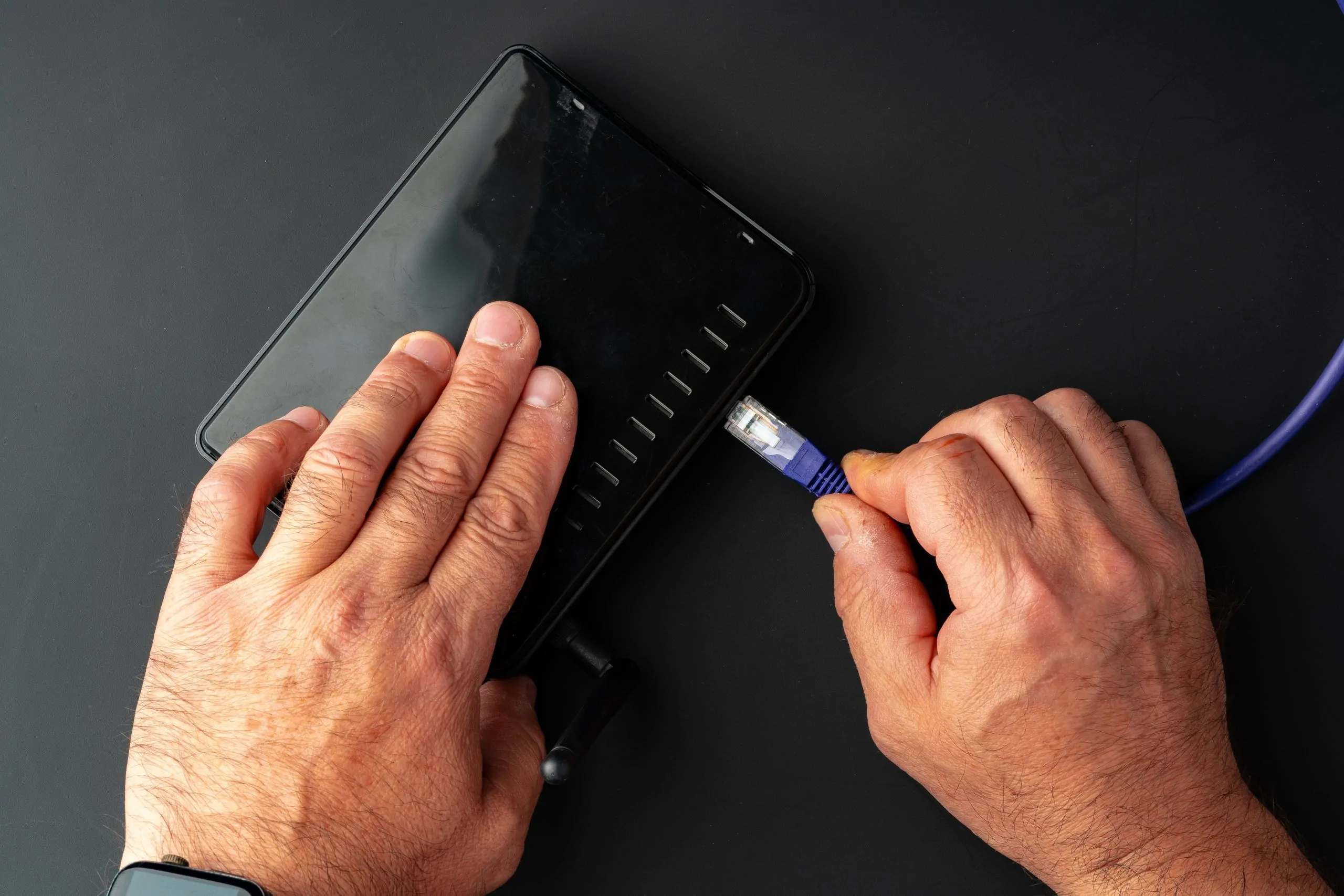
At the premises, a key component called the Optical Network Terminal (ONT) is installed. The ONT is critical for converting the light signals transmitted through the fibre-optic cable into digital data that devices can use. The ONT is usually installed on an interior or exterior wall of the property, depending on the layout and customer preferences. Internet Service Providers (ISPs) often supply compatible routers as part of the installation, ensuring a seamless connection between the ONT and the home or business network.
Cost of Installation: The cost of fibre installation depends on various factors, such as the location, type of property, and infrastructure required. While some ISPs include the installation cost in their plans, others may charge separately. Customers are encouraged to consult their ISP for a detailed breakdown of expenses.
Provided Equipment: Most ISPs provide necessary equipment like the ONT and often a compatible router as part of the installation package. However, customers should confirm what is included upfront to avoid unexpected charges.
Uninterrupted Connectivity: To address concerns about power outages, solutions like battery backups or inverters can help ensure continuous connectivity. These devices supply power to the ONT and router during an outage, maintaining network stability during critical times.
Fibre installation provides an excellent long-term solution for connectivity, combining the efforts of ISPs, advanced technology like ONTs, and proactive measures for reliability. By understanding the process and addressing common concerns, users can fully benefit from this cutting-edge internet solution.
Addressing Fibre Concerns
When considering fibre internet, several common concerns often arise. One of the primary issues is cost. While fibre packages can sometimes seem more expensive upfront compared to traditional options, there is a wide range of plans tailored to different budgets and usage requirements. Many providers offer tiered packages, allowing users to select a plan that aligns with their specific data needs and financial situation. Over time, the higher performance and reliability of fibre internet often translate into greater value.
Another area of concern involves the need for router upgrades. Fibre-ready routers are designed to handle the faster speeds and advanced capabilities of a fibre connection, making them a worthwhile investment for those seeking optimal performance. Upgrading to a fibre-compatible router ensures that users can fully utilise the maximum speed and stability provided by their connection, reducing potential bottlenecks in home networks.
Power failures can also be a worry for fibre users since the ONT and router require electricity to function. Deploying an uninterruptible power supply (UPS) unit is a practical solution for maintaining connectivity during outages. A UPS can keep your ONT and router operational, ensuring internet access for essential tasks even when the main power supply is disrupted.
By addressing these common concerns with informed decisions and proactive measures, users can maximise the benefits of fibre internet and enjoy a seamless, high-speed online experience, supported by the latest in internet technology and fibre equipment.
Ready to experience uninterrupted, ultra-fast internet for your home or business?
Lightstruck, one of Southern Africa’s premier fibre service providers, is here to make it happen. We specialise in deploying top-tier fibre networks in communities that signal a demand, ensuring reliable and high-quality connectivity. By adhering to the best infrastructure principles, we aim to deliver fibre as a next-generation digital utility—done right from the very beginning.
The fibre installation process involves three essential network types, two of which are expertly handled by us to create a seamless foundation for your new internet experience. Take the next step toward world-class, high-speed internet and join the hundreds of satisfied customers powering their homes and businesses with Lightstruck fibre. Get in touch with us today to enquire about fibre availability in your area!