
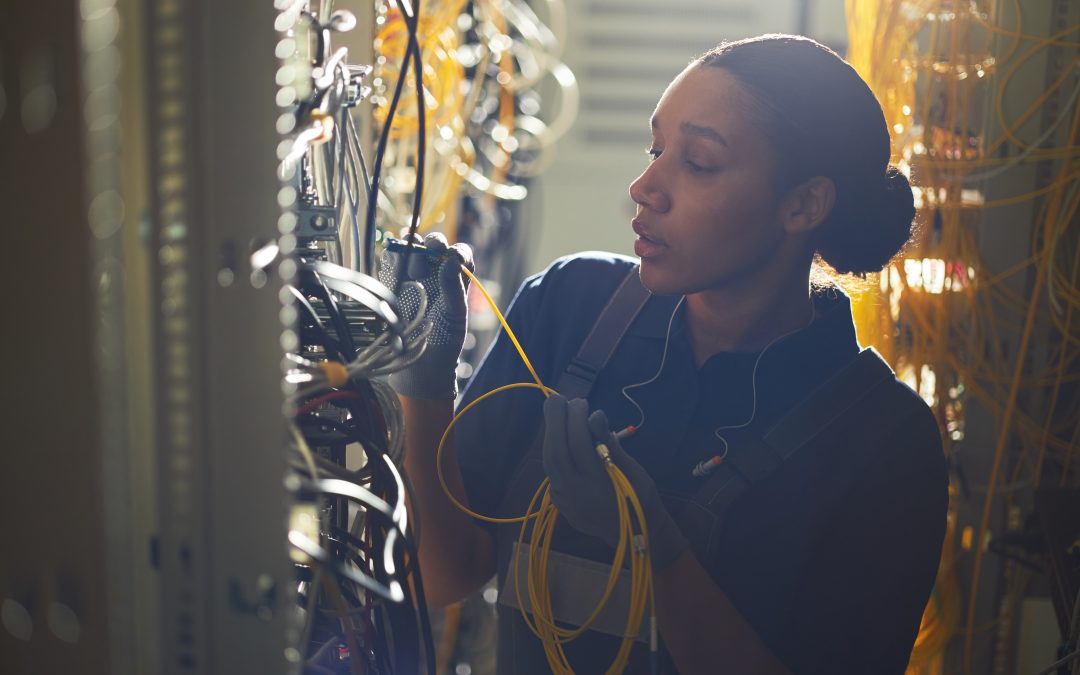
Fibre connectivity is revolutionising Africa’s digital landscape, laying the foundation for innovation and economic growth across the continent. Acting as the backbone of digital transformation, it enables seamless communication, drives efficiencies, and fosters development across critical sectors such as education, healthcare, and commerce.
With access to high-speed, reliable internet, students can engage in digital learning platforms, healthcare providers can implement telemedicine solutions, and businesses can expand their operations to global markets. Furthermore, the ambition to bridge the digital divide is stronger than ever, with increasing efforts to ensure inclusive access to fibre connectivity for remote and underserved communities, unlocking boundless opportunities for a connected, equitable future.
The Role of Fibre Connectivity in Digital Transformation
Fibre connectivity refers to the use of fibre-optic cables to transmit data at incredibly high speeds and across long distances. Unlike traditional copper-based connections, fibre-optic technology utilises pulses of light to transfer information, resulting in significantly faster and more reliable internet connections. This reliability and speed make fibre connectivity essential for driving digital transformation in an increasingly interconnected world.
Fibre connectivity plays a pivotal role in socioeconomic growth by enabling access to digital services and economic opportunities. Communities with robust fibre networks can attract investment, foster innovation, and create jobs. For example, small businesses can expand their customer base by venturing into online markets, while entrepreneurs can leverage digital tools to innovate and scale. Fibre connectivity helps bridge the gap between urban and rural areas, promoting economic inclusion and providing underserved regions with access to critical resources like telemedicine, e-governance, and online marketplaces.
The importance of fibre connectivity becomes evident in sectors such as remote work, education, and telecommunications. For remote work, secure and high-speed connections allow professionals to collaborate seamlessly across borders, enhancing productivity and global workforce integration. Similarly, fibre connectivity supports the growth of online education by enabling access to virtual classrooms, e-learning platforms, and on-demand educational content for students in remote or disadvantaged areas. Telecommunications, too, benefit from fibre networks by powering 5G infrastructure, ensuring smooth video calls, rapid data transfers, and reliable media streaming.
The Current State of Fibre Connectivity in Africa
Fibre connectivity in Africa presents a mixed landscape, marked by significant progress in urban areas but considerable gaps in rural regions. Urban centres across the continent enjoy relatively better access to fibre networks, with coverage in cities like Nairobi, Lagos, and Johannesburg showing strong growth due to concentrated investments and high population densities. For instance, it is estimated that urban areas account for nearly 80% of Africa’s current fibre coverage, while rural areas lag far behind, with less than 20% coverage in many countries.
Internet speeds also vary widely, with urban regions benefiting from faster broadband connections enabled by fibre networks. South Africa leads the way, boasting average internet speeds of approximately 45 Mbps in urban areas, compared to the continent-wide average of 10 Mbps. However, in rural parts of Africa, average speeds can drop significantly, often falling below 5 Mbps due to insufficient infrastructure.
Regional disparities highlight the digital divide, with North and Southern Africa exhibiting higher fibre penetration rates compared to Central and East Africa. Countries like Egypt and South Africa have emerged as key markets, driven by government initiatives and private sector involvement. Particularly in South Africa, fibre-to-home services have shown rapid uptake, with over 1.1 million homes connected as of 2023—a figure that continues to grow steadily.
However, much of the rural population across Africa remains underserved, where limited access to fibre hinders socio-economic development and access to digital opportunities. Bridging this gap remains a critical challenge for governments, telecommunications companies, and international development organisations alike.

Key Challenges Facing Fibre Expansion
Expanding fibre optic networks across Africa faces several significant obstacles. One of the primary challenges is infrastructure development, particularly in rural and remote areas. The cost of laying fibre optic cables is high, with estimates suggesting that deploying fibre in less densely populated regions can be up to 40% more expensive than in urban centres. This disparity is often compounded by challenging terrains and limited availability of existing infrastructure to support the deployment.
Financial investment presents another hurdle. Many telecommunications companies are hesitant to invest heavily in fibre expansion in areas where the return on investment is uncertain due to low population density or limited purchasing power. Additionally, financing models often rely on substantial government subsidies or international aid, which can create delays and uncertainties in project timelines. This financial constraint often reinforces a prioritisation of urban areas, where infrastructure is cheaper to build and demand from businesses and higher-income households ensures quicker returns.
Policy barriers further complicate the rollout of fibre networks. Regulatory hurdles, such as cumbersome licensing procedures and inconsistent policies between nations, deter private sector investment. A lack of coordination among stakeholders can also result in fragmented efforts, leaving many regions behind. Streamlined and transparent policies are critical to fostering collaboration between governments, development organisations, and telecommunications providers.
Socioeconomic factors play a significant role in connectivity access. Affordability remains a key barrier, as many households in underserved communities cannot afford the high costs of fibre broadband services even when they become available. According to recent data, only 28% of the population in sub-Saharan Africa could afford broadband services within their income levels in 2022. Additionally, the prioritisation of fibre rollouts in urban areas exacerbates the digital divide, perpetuating unequal access to education, healthcare, and economic opportunities in rural communities.
Currently, it is estimated that more than 70% of sub-Saharan Africa lacks access to fibre optic networks. This connectivity gap limits economic growth, with studies showing that a 10% increase in broadband penetration can lead to a 1.5% increase in GDP per capita. Underserved communities in rural areas face systemic disadvantages, including fewer resources for education, lower-quality healthcare services, and restricted access to the global digital economy. Addressing these disparities requires significant investment, forward-looking policies, and collaborative partnerships to ensure more inclusive digital transformation across the continent.
Initiatives Driving Fibre Expansion in Africa
Collaborative efforts between public and private sectors are proving instrumental in driving fibre access across Africa. Initiatives such as SMART Africa Broadband 2025 aim to reduce the digital divide by increasing broadband penetration and ensuring affordable internet for all. This ambitious program brings together governments, private organisations, and development partners to create a unified strategy for digital empowerment.
Similarly, projects like AfricaBBMaps focus on mapping existing broadband infrastructure to identify gaps and guide investment in underserved areas. By providing a transparent overview of broadband availability, this initiative enables precise and efficient decision-making for both governments and private players.
On the government side, programmes like South Africa’s SA Connect are addressing infrastructure deficiencies in rural and underserved communities. SA Connect seeks to provide universal broadband coverage to schools, clinics, and other public facilities, ultimately fostering socio-economic development. By combining government-led strategies with private sector expertise, Africa is taking meaningful strides toward improved connectivity and digital inclusivity.

Benefits of Fibre Connectivity for Africa’s Future
Enabling Innovation and New Business Opportunities
Fibre connectivity empowers entrepreneurs and businesses by providing the infrastructure necessary for innovation. With high-speed and reliable internet, start-ups can leverage emerging technologies like AI, IoT, and cloud computing to scale operations and explore new markets. Small and medium-sized enterprises (SMEs) can tap into global e-commerce platforms, creating jobs and driving economic growth. This connectivity also fosters collaboration by enabling seamless communication and knowledge sharing across borders, laying the groundwork for dynamic and competitive industries.
Transforming Education
Fibre-optic internet brings significant advancements to education by enabling access to e-learning platforms, digital libraries, and remote learning opportunities. This is particularly impactful for remote and underserved communities, where traditional education resources may be limited. Faster connectivity supports interactive learning experiences, fosters skill development, and bridges the education gap, preparing Africa’s youth for careers in an increasingly digital economy.
Improving Healthcare Delivery
Reliable and fast internet connectivity powered by fibre networks is revolutionising healthcare across the continent. Telemedicine services can connect patients in remote areas with specialists in urban centres, providing timely and life-saving interventions. High-speed internet also supports data-driven healthcare solutions, such as electronic medical record systems and advanced diagnostic tools, which improve efficiency and patient outcomes.
Expanding Access to Global Markets
Fibre networks position African businesses to compete on a global stage by facilitating seamless access to international markets. Improved digital infrastructure allows African exporters, creatives, and innovators to showcase their products and services globally. This access generates foreign investment and strengthens value chains, building a robust foundation for sustainable economic growth.
Shaping Africa’s Digital Future
Fibre connectivity is not just a tool for modernisation—it is shaping the continent’s digital identity. By fostering a tech-savvy workforce and enabling innovative solutions to socio-economic challenges, fibre networks are paving the way for Africa to emerge as a global hub for digital transformation. Over the long term, this digital evolution will boost regional integration, enhance government service delivery, and set the stage for Africa’s participation in a fully connected global economy.
Resources
Fibre Internet Trends and Statistics South Africa – 2025
Fibre key to ubiquitous broadband rollout in Africa
Internet usage in Africa – statistics & facts
The most popular fibre-to-the-home speeds in South Africa
AfricaBBMaps Project Secures USD 16.2 Million for Broadband Mapping in 11 African Countries
A TRANSFORMATIVE BROADBAND STRATEGY TO SINGLE DIGITAL MARKET
Looking to switch to Fibre?
Discover how Lightstruck is transforming connectivity in Southern Africa! At Lightstruck, we are committed to advancing the digital landscape by deploying reliable, high-speed fibre optic internet. Fibre not only enhances communication but also revolutionises how businesses operate, how education is accessed, and how individuals connect in their daily lives.
See if fibre is available in your area by checking Lightstruck’s coverage map today. Join us in building smarter, connected communities with next-generation digital utilities.